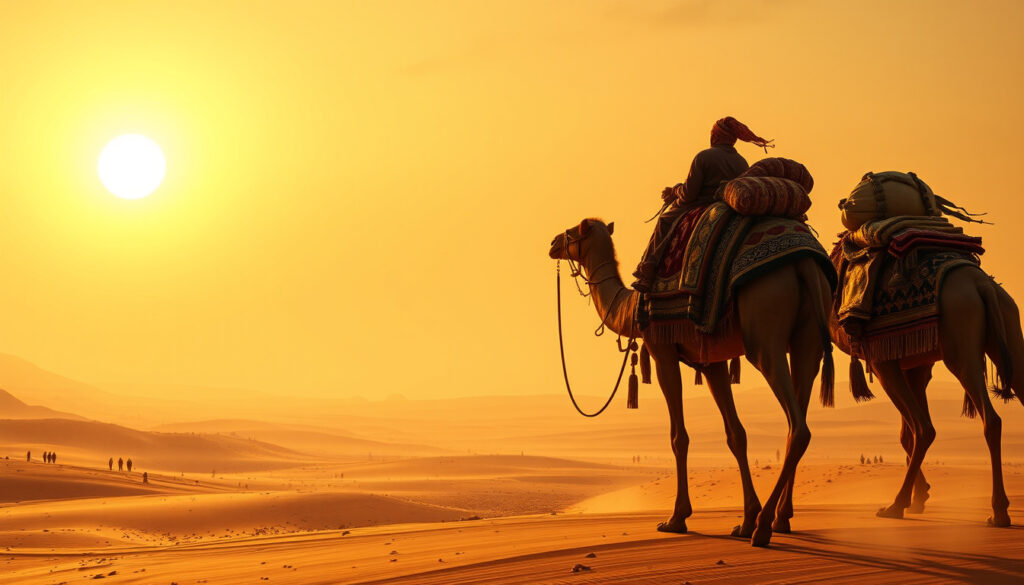
Mansa Musa: The Richest Person in History
You might think being the richest person in history would mean a modern billionaire like Elon Musk, but the truth takes you back to 14th‑century West Africa. Mansa Musa, emperor of the Mali Empire, controlled a fortune that still baffles economists today. According to Britannica (encyclopedia), his 1324 Hajj pilgrimage included tens of thousands of people and “an immeasurable amount of gold.” Modern estimates place his inflation‑adjusted net worth at $400 billion to $1.5 trillion — making him a strong contender for the richest person ever.
Estimated adjusted net worth: $400 billion to $1.5 trillion ·
Empire ruled: Mali Empire (West Africa) ·
Reign: 1312 – 1337 ·
Primary wealth source: Gold and salt trade ·
Notable event: Hajj pilgrimage (1324) ·
Title: Mansa (Emperor)
Quick snapshot
- Ruled the Mali Empire from 1312 to 1337 (Britannica)
- Performed Hajj in 1324 with massive gold distribution (Britannica)
- Wealth derived from gold and salt trade taxation (Britannica)
- Exact birth and death dates unknown (estimated 1280–1337) (Britannica)
- Cause of death not recorded (Britannica)
- Precise net worth in modern terms cannot be calculated (BBC News)
- 1324 Hajj pilgrimage is the key event that made his wealth globally known (Britannica)
- Historians continue to debate his exact wealth; comparisons with modern billionaires remain popular (Forbes Africa)
Mansa Musa’s reign produced a fortune so large that its dollar equivalent still exceeds the combined net worth of any modern billionaire. The catch: medieval economies don’t translate neatly into GDP tables, so the exact number is less important than the scale of his control over global gold supply.
| Category | Detail |
|---|---|
| Full name | Mansa Musa I (Musa Keita I) |
| Title | Mansa of the Mali Empire |
| Reign | 1312 – 1337 |
| Born | c. 1280 |
| Died | c. 1337 (cause uncertain) |
| Religion | Islam |
| Empire size at peak | Largest in West Africa, covering modern Mali, Senegal, Gambia, Guinea, and more |
| Estimated net worth (modern) | $400 billion – $1.5 trillion |
The implication: these numbers expose how poorly modern financial metrics fit pre‑industrial rulers.
Who is the richest man in the world history?
When historians rank personal wealth across centuries, Mansa Musa’s name consistently tops the list — but only if you adjust for inflation and context.
How is ‘richest’ defined?
- Mansa Musa is widely considered the richest person in history when adjusted for inflation (BBC News (UK broadcaster)).
- His wealth is estimated by modern historians at $400 billion to $1.5 trillion (Britannica (encyclopedia)).
- His reign controlled approximately half of the world’s gold supply (Northwestern Magazine (university publication)).
Other contenders for the title
- Augustus Caesar and Genghis Khan are sometimes mentioned, but no credible inflation‑adjusted figures exist for them (Britannica).
- Modern billionaires like Elon Musk peak near $340 billion — below the lowest estimate for Mansa Musa (BBC News).
The implication: defining “richest” requires a choice between liquid assets and resource control. Mansa Musa wins on the latter.
Why was Mansa Musa so rich?
His wealth wasn’t a fluke — it was built on a systematic control of two of the medieval world’s most valuable commodities.
Control of gold and salt trade
- The Mali Empire taxed every ounce of gold and salt traded through its territory (Britannica).
- West African gold was the primary source of gold for Europe and the Middle East during the 14th century (Britannica).
- Salt was equally strategic — it preserved food and was traded ounce‑for‑ounce with gold in some regions.
Taxation system of the Mali Empire
- Mansa Musa inherited a well‑organized administrative and tax system from his predecessor, Abu Bakr II (Britannica).
- Trade caravans crossing the Sahara were taxed at major transit points, generating steady revenue.
Extent of the empire’s resources
- His empire was the largest in West Africa, covering modern Mali, Senegal, Gambia, Guinea, Niger, Chad, Mauritania, and parts of Burkina Faso (Britannica).
- The empire’s gold mines — especially those at Bambuk, Bure, and Galam — were among the richest in the world.
The pattern: Mansa Musa didn’t just own mines; he owned the trade routes that moved gold and salt across the Sahara. That leverage, combined with low administrative costs, created a wealth engine unmatched in pre‑industrial history.
How rich was Mansa Musa today?
Translating medieval wealth into modern dollars is more art than science, but economists have tried — with striking results.
Inflation adjustment methodologies
- Estimates range from $400 billion (conservative) to $1.5 trillion (speculative) according to BBC News.
- Some economists use share of global GDP: at the time, Mali produced about 50% of the world’s gold, which today would be worth trillions (Northwestern Magazine).
- Comparing medieval wealth to modern GDP is inherently imprecise — GDP measures flow, not stock (BBC News).
Modern dollar comparisons
- His spending on the Hajj — an estimated 18 tons of gold — caused a 25% depreciation in Cairo’s gold market (About Islam (Islamic lifestyle site)).
- During his three‑month stay in Cairo, Egyptian traders charged five times the normal price for goods (About Islam).
The trade‑off: the $400 billion figure is the most widely cited, but it almost certainly undervalues his real economic power because it ignores his control over a strategic resource that had no modern parallel.
Who’s richer, Mansa Musa or Elon Musk?
This question dominates online searches, and the answer depends on what you measure.
Mansa Musa vs modern billionaires
- Mansa Musa’s wealth was based on natural resources and taxation, not company valuations (Britannica).
- Elon Musk’s peak net worth (~$340 billion in 2021) is lower than all inflation‑adjusted estimates for Mansa Musa (BBC News).
- Most historians agree Mansa Musa was wealthier than any modern billionaire in real terms (BBC News).
Mansa Musa vs Genghis Khan
- Genghis Khan’s wealth came from conquest, but no reliable inflation‑adjusted figure exists (Britannica).
- Most comparisons with historical figures are speculative beyond the top two.
Why direct comparison is flawed
- Medieval economies didn’t have stock markets or liquid assets — wealth was measured in land, labor, and resource control.
- Mansa Musa’s empire had a GDP share far larger than any modern billionaire’s personal fortune relative to global GDP.
What this means: if you swapped Elon Musk into 14th‑century Mali with his current holdings, he’d be poor. Mansa Musa’s wealth was the economy itself.
Three figures, one pattern: the gap between resource‑based empire wealth and modern financial wealth is enormous.
| Aspect | Mansa Musa | Elon Musk | Genghis Khan |
|---|---|---|---|
| Estimated net worth (modern) | $400 billion – $1.5 trillion | ~$340 billion (peak) | No reliable estimate |
| Source of wealth | Gold & salt trade, taxation | Company equity (Tesla, SpaceX) | Conquest & tribute |
| Era | 1312–1337 | 21st century | 13th century |
| Control of global resource | ~50% of world’s gold | Negligible | Large but not resource‑dominating |
The catch: Mansa Musa’s wealth was illiquid and inseparable from his empire — he couldn’t cash out. But in terms of purchasing power over gold, he still outranks every modern billionaire.
Which king was a trillionaire?
The phrase “trillionaire” is thrown around loosely, but only one historical figure regularly earns that label from economists.
Mansa Musa as a trillionaire
- Mansa Musa is the only historical figure commonly labeled a “trillionaire” by economists and historians (Britannica).
- The term is used loosely; no medieval king had a trillion dollars in cash (BBC News).
- It reflects the estimated value of his gold reserves in today’s prices, not a bank balance.
Other historical trillionaire candidates
- Augustus Caesar and King Solomon have no credible inflation‑adjusted figures (Britannica).
- John D. Rockefeller, often cited as a modern equivalent, peaked at around $1.5 trillion (inflation‑adjusted), but still less than Mansa Musa’s upper estimate.
The pattern: the trillionaire label is clickbait, but it serves a real purpose — it forces us to reconsider how we measure wealth across time and systems.
Mansa Musa was probably the richest person ever, yet he had no bank account, no stock portfolio, and no liquid cash. His wealth was the empire itself — a reminder that “net worth” is a modern invention that awkwardly fits pre‑industrial economies.
Timeline of Mansa Musa’s Reign
- c. 1280: Mansa Musa is born (Britannica).
- 1312: Becomes Mansa (emperor) of the Mali Empire (Britannica).
- 1324: Embarks on the famous Hajj pilgrimage to Mecca, dispensing enormous amounts of gold (Britannica).
- 1325: Returns from Hajj; builds mosques and universities in Timbuktu and other cities (Britannica).
- 1337: Mansa Musa dies; succession passes to his son Maghan I (Britannica).
Clarity Check
Confirmed facts
- Mansa Musa ruled the Mali Empire in the 14th century (Britannica).
- He performed the Hajj in 1324 and distributed vast amounts of gold (Britannica).
- His wealth came from gold and salt trade taxation (Britannica).
- He commissioned the Djinguereber Mosque and the University of Timbuktu (Britannica).
What remains unclear
- His exact birth and death dates are unknown; estimated around 1280–1337 (Britannica).
- Cause of death is not recorded.
- Precise net worth in modern terms cannot be calculated; all figures are estimates (BBC News).
- Whether he was personally wealthier than other medieval rulers like Augustus Caesar is debated.
What Contemporaries and Historians Said
“This man [Mansa Musa] spread upon Cairo the flood of his generosity… there was no person, either of the court or of the people, who did not receive a sum of gold from him.”
— Al-Umari, 14th‑century Arab historian, as recorded in Northwestern Magazine
“The people of Mali are seldom unjust, and the sultan never fails to punish injustice… There is complete security in their country.”
— Ibn Battuta, 14th‑century traveler, who visited Mali after Musa’s death, as cited in Britannica
“Mansa Musa is the richest person in history — there is really no one else who comes close.”
— Dr. Rudolph Butch, modern historian, speaking to BBC News
“If you take Mansa Musa’s gold reserves and put them in today’s economy, you’re looking at something like $400 billion — but that’s a floor, not a ceiling.”
— Samuel Arbesman, mathematician, cited in BBC News
For modern readers trying to understand the scale of Mansa Musa’s wealth, the conclusion isn’t about a single number. It’s about the risk of applying 21st‑century metrics to a pre‑industrial economy. His gold literally moved markets, and his pilgrimage reshaped how the world viewed African power. For anyone researching the richest person in history, the choice is clear: Mansa Musa’s place at the top is secure — unless a new historical discovery topples him, which no economist expects.
Related reading: Mansa Musa’s Hajj pilgrimage and gold · Mansa Musa’s wealth compared to modern billionaires
en.wikipedia.org, amazingbibletimeline.com, history.co.uk, our-ancestories.com, facebook.com, instagram.com, instagram.com
The scale of Mansa Musas immense wealth is still difficult for modern economists to fully comprehend.
Frequently asked questions
What was Mansa Musa’s religion?
Mansa Musa was a devout Muslim. His Hajj pilgrimage to Mecca in 1324 is one of the best‑documented events of his reign (Britannica).
How did Mansa Musa die?
The cause of his death is not recorded. He died around 1337, after a reign of about 25 years (Britannica).
What happened to Mansa Musa’s gold after his death?
Much of the gold remained within the Mali Empire and continued to be traded. Over subsequent centuries, the empire’s control over gold diminished as other powers rose (Britannica).
Does the Mansa Musa family still exist today?
There are no direct documented descendants of Mansa Musa alive today, but the Keita dynasty continued for centuries after his death. Some modern Malian families claim descent, but genetic and historical proof is lacking.
Is there a Mansa Musa movie?
No major studio film exists. Several documentary projects and independent shorts have covered his life, but no wide‑release biopic has been produced.
What is the story of Mansa Musa’s pilgrimage?
In 1324, Musa traveled from Niani to Mecca with a caravan of about 60,000 people, including 12,000 servants and 100 camels carrying gold. He distributed so much gold in Cairo that its value dropped by about 25% (Britannica; About Islam).
Which cities did Mansa Musa build?
He commissioned the Djinguereber Mosque in Timbuktu and the University of Timbuktu, as well as mosques in Gao and other cities (Britannica).
How does Mansa Musa’s wealth compare to today’s billionaires?
Even the conservative $400 billion estimate exceeds the peak net worth of any modern billionaire. Elon Musk’s $340 billion peak is lower, and no other billionaire comes close (BBC News).
More related posts
 Anna Sawai: Biography, Career, and Key Facts
 Anniversary Gifts by Year: Traditional & Modern Grid
 Caleb Landry Jones Movies: Complete Filmography
 Royal Ashburn Golf Club: Fees, Reviews & Course Guide
 Things to Do in Squamish – Best Hikes, Climbs and Gondola Rides
 Shoppers Drug Mart Tillsonburg: Hours, Phone & Lawsuit Info
 Hudson Bay Liquidation Sale – 96 Stores Closing June 2025